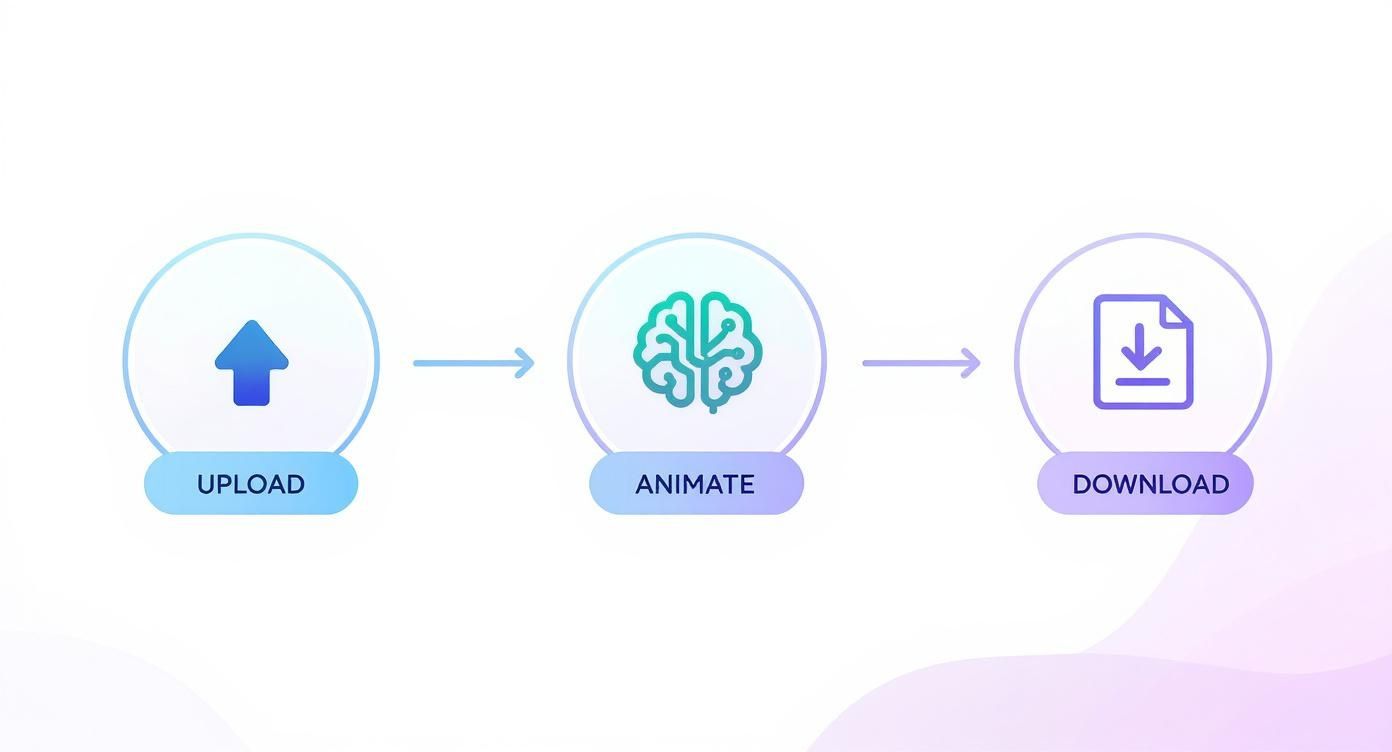
Categories: AI Video Workflow, Creator Strategy, Production Process
Tags: seeddance, seedance 2.0, ai video workflow, content strategy, creator toolkit
Introduction
Imagine your photo gallery coming alive: the gentle blink in an old portrait, or the mesmerizing steam rising from a coffee cup in a product shot. This isn't science fiction; it's the power of AI picture animators. This guide explores how these tools transform static images into dynamic videos, enhancing storytelling and capturing attention in ways traditional stills cannot.
Unlocking Motion in Still Images
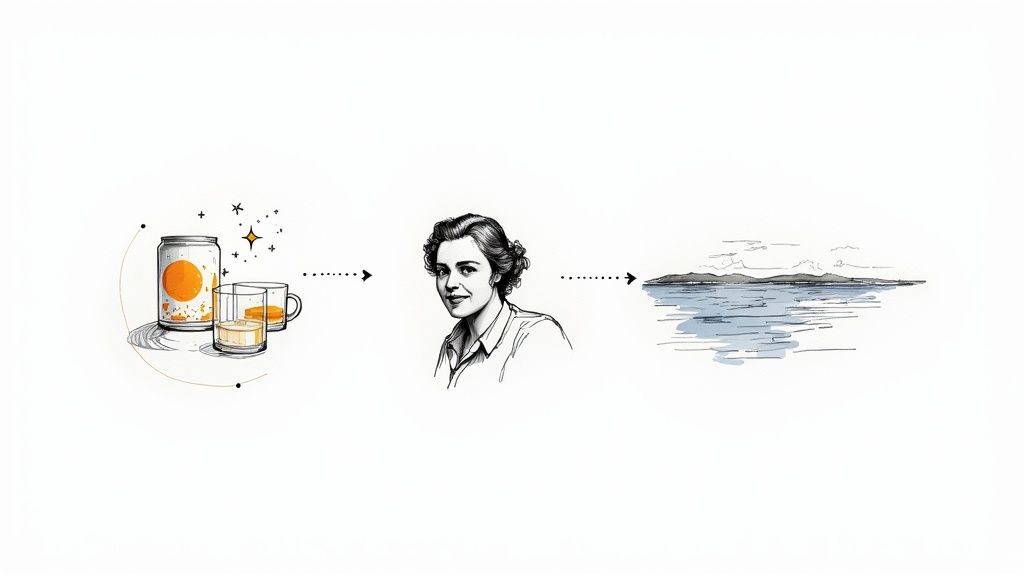
Picture this: you're swiping through a photo gallery, but instead of flat images, each one has a spark of life. The eyes in an old family portrait gently blink. The steam from a cup of coffee in a product shot rises in a mesmerizing loop. The main goal is to tell a better story and grab someone's attention in a way a still image just can't. By adding a little bit of motion, you can achieve some pretty cool things.
How an AI Actually Learns to Animate a Picture
At its heart, an AI picture animator isn't just stretching or warping a photo. It's acting like a brilliant artist who also happens to be a physicist, a process we call image-to-video synthesis. Once the AI understands what's in the picture, it can start generating motion. This is where things get really interesting, as different AI models have their own unique ways of creating movement that feels real.
The "brain" behind this magic often relies on a Transformer architecture. This foundational technology, also used in large language models, excels at understanding context and sequences, making it ideal for creating believable movement from still images.
Key Capabilities of AI Picture Animators
This technology offers a range of functions and outputs. A typical AI picture animator can transform still images into dynamic content, adding subtle movements that enhance visual appeal and narrative. These tools are built to bring static visuals to life, offering a snapshot of what's possible with image-to-video synthesis.
Creative Ways to Use an AI Picture Animator
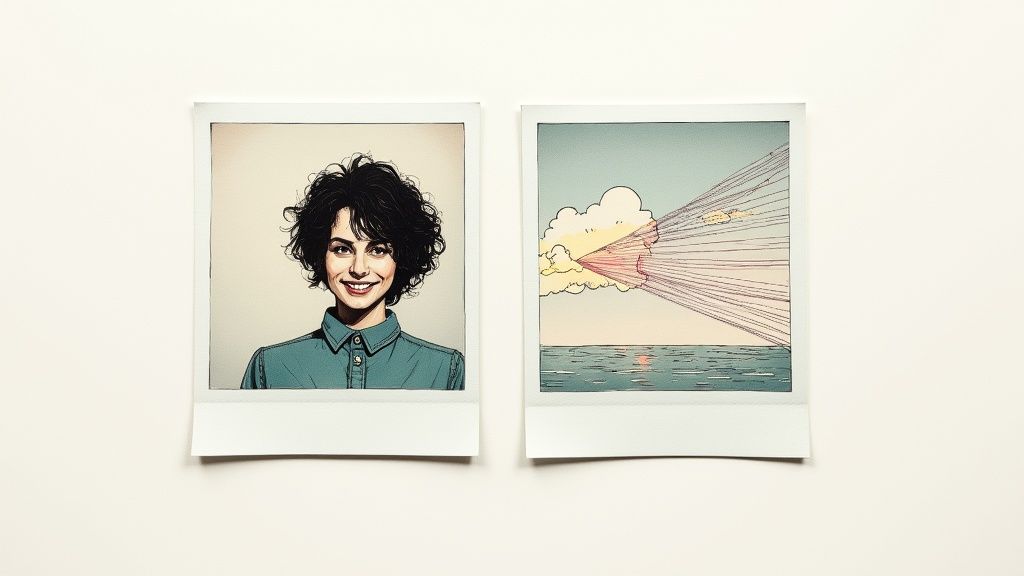
The real magic of an AI picture animator isn't just the tech behind it; it’s about the creative doors it swings wide open for all of us. These tools are no longer just a novelty; they are practical assets for telling stories, selling products, and educating audiences. The possibilities are truly endless, limited only by your imagination. The core objective remains consistent: to use subtle, AI-driven motion to capture attention and convey a message more powerfully.
Choosing the Right AI Animation Tool
Picking the right AI picture animator can feel like choosing the perfect paintbrush for a masterpiece—the best one really depends on what you're trying to create. With a flood of new tools hitting the market, it’s easy to get overwhelmed. Beyond basic camera paths, the actual quality and style of the animation are what truly matter. You need a tool that respects the integrity of your original image while bringing it to life. Finally, consider the bigger picture: how does this tool integrate into your creative process and budget? The technical features are only one part of the equation.
How AI Animation Is Reshaping Creative Industries
The emergence of the AI picture animator isn't just a neat tech demo; it's a genuine shift in how creative work happens. These tools are breaking out of niche circles and becoming standard issue for artists, marketers, and filmmakers, completely upending traditional workflows. This technology acts as a powerful creative collaborator, sparking imagination across various fields.
Navigating Copyright and Ethical Questions
As with any powerful new technology, AI picture animators raise important questions about copyright and ethics. Understanding the implications of using AI-generated content, especially when it involves transforming existing images, is crucial for responsible creation.
Got Questions About AI Picture Animators?
This technology is rapidly evolving, and questions are natural. From understanding the underlying AI models to exploring practical applications, continuous learning is key to leveraging these tools effectively.
Why Bother Animating a Picture?
The primary reason to animate a picture is to tell a better story and grab attention in a way a still image simply cannot. Adding motion creates engagement, making content more memorable and impactful.
Practical Weekly Workflow
- Choose 2 to 3 blocks from this article and define a weekly objective.
- Build a concise first draft for each selected block.
- Improve structure, tone, and clarity before publishing.
- Compare variants using a single measurable KPI.
- Keep only the formats that consistently outperform baseline.
Conclusion
The most reliable way to scale content output is to standardize how each piece is produced. Keep the structure stable, iterate by section, and scale only what proves performance. AI picture animators are a powerful addition to any creator's toolkit, offering new avenues for expression and engagement.
Next Step
Explore Seeddance workflow templates: https://seeddance.app/
FAQs
1) Can this workflow work for a solo creator? Yes. Start with a small weekly scope and reuse the same production blocks.
2) How many variants should I test per post? 2 to 4 focused variants are usually enough to identify clear winners.
3) Should I prioritize trends or consistency? Use trends for reach, but keep a consistent format system for long-term brand memory.