
Categories: AI Video Workflow, Creator Strategy, Production Process
Tags: seeddance, seedance 2.0, ai video workflow, content strategy, creator toolkit
Introduction
This guide turns key ideas into a practical Seeddance production framework.
The focus is simple: clearer planning, faster execution, and stronger publishing consistency with Seedance 2.0.
Core Content Blocks
1) The Power of Motion: Why Animate Still Photos?
Let's be honest—our social feeds are incredibly noisy. A static image, no matter how beautiful, can easily get scrolled past in the blink of an eye. Adding a touch of motion is one of the simplest and most effective ways to make someone pause.
Why this works:
- Keeps production repeatable
- Reduces random editing loops
- Makes weekly iteration measurable
2) Choosing and Preparing Your Photos for Animation
When you animate a photo, you're really becoming a storyteller. That portrait isn't just a face anymore; it’s a person whose hair is gently blowing in the breeze. That landscape shot becomes an immersive scene, with clouds lazily drifting by and water rippling in the foreground.
Why this works:
- Keeps production repeatable
- Reduces random editing loops
- Makes weekly iteration measurable
3) A Practical Guide to Photo Animation Techniques
The move toward motion isn't just a gut feeling; the numbers back it up. The global animation market was valued at around $394.6 billion in 2022 and is expected to hit nearly $528.8 billion by 2030.
Why this works:
- Keeps production repeatable
- Reduces random editing loops
- Makes weekly iteration measurable
4) Using AI Tools for Instant Photo Animation
The secret to a stunning animation doesn't start with the software; it starts with the photo you choose. This choice is the bedrock of your entire project, and it has a massive impact on how believable and polished your final animation will feel.

Why this works:
- Keeps production repeatable
- Reduces random editing loops
- Makes weekly iteration measurable
5) Getting Your Animated Photos Ready for the World
Beyond just being a sharp picture, the composition is everything. The best photos for this kind of work have a really clear separation between the main subject and the background.
Why this works:
- Keeps production repeatable
- Reduces random editing loops
- Makes weekly iteration measurable
6) Got Questions About Animating Photos? We've Got Answers
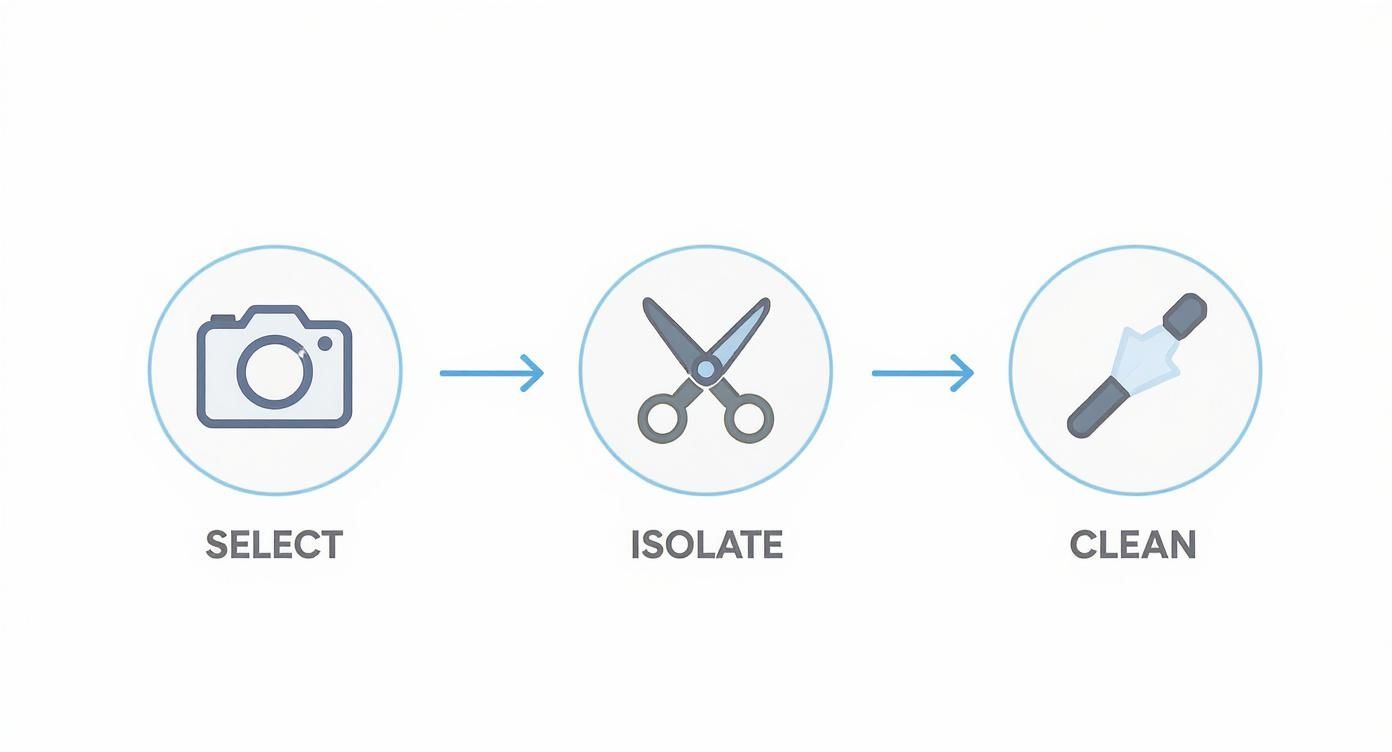
Once you've picked your winner, it's time for a little prep work. This is where you roll up your sleeves in a tool like Adobe Photoshop to isolate your subject from its background.
Why this works:
- Keeps production repeatable
- Reduces random editing loops
- Makes weekly iteration measurable
7) Turning Moments into Narratives
With a clean, prepped photo in hand, you get to the fun part—choosing how to bring it to life. This isn't just about picking a cool effect; it's about deciding what story you want to tell.
Why this works:
- Keeps production repeatable
- Reduces random editing loops
- Makes weekly iteration measurable
8) The Growing Demand for Dynamic Content
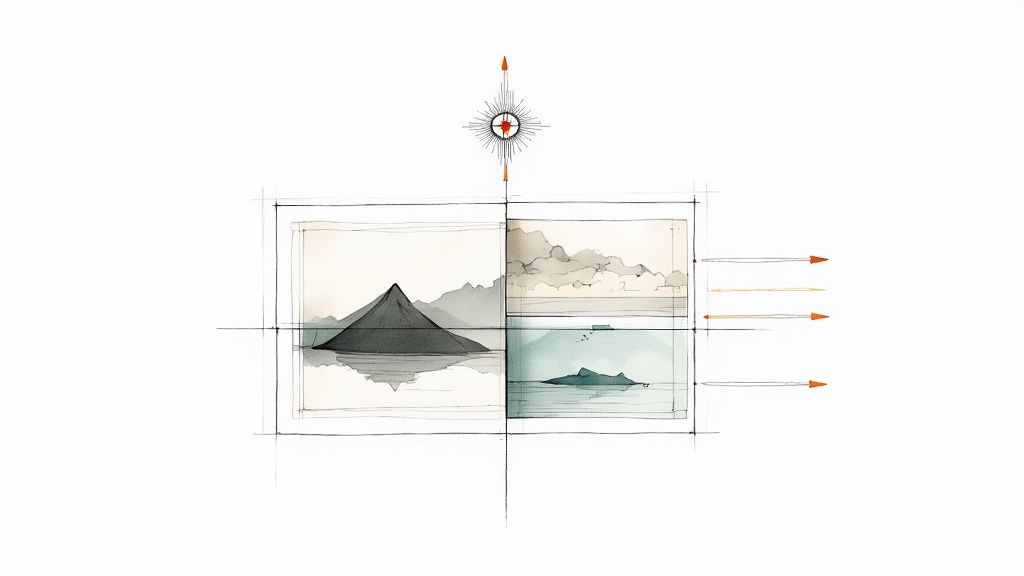
Ultimately, the best choice depends entirely on your original photo and the feeling you're aiming for. A dramatic mountain shot begs for a parallax effect, while a quiet coffee shop scene is perfect for a subtle steam cinemagraph.
Why this works:
- Keeps production repeatable
- Reduces random editing loops
- Makes weekly iteration measurable
9) What Makes a Photo a Great Candidate for Motion?
You've probably seen the parallax effect (often called the 2.5D effect) even if you didn't know its name. It’s a brilliant way to fake three-dimensional depth in a flat image.
Why this works:
- Keeps production repeatable
- Reduces random editing loops
- Makes weekly iteration measurable
10) The Cleanup Crew: Isolating Your Subject
Sometimes the most powerful animations are the most understated. That's the whole idea behind subtle motion. Instead of moving the entire frame, you animate just one or two natural elements to breathe life into the scene.
Why this works:
- Keeps production repeatable
- Reduces random editing loops
- Makes weekly iteration measurable
Practical Weekly Workflow
- Choose 2 to 3 blocks from this article and define a weekly objective.
- Build a concise first draft for each selected block.
- Improve structure, tone, and clarity before publishing.
- Compare variants using a single measurable KPI.
- Keep only the formats that consistently outperform baseline.
Conclusion
The most reliable way to scale content output is to standardize how each piece is produced.
Keep the structure stable, iterate by section, and scale only what proves performance.
Next Step
Explore Seeddance workflow templates: https://seeddance.app/
FAQs
1) Can this workflow work for a solo creator?
Yes. Start with a small weekly scope and reuse the same production blocks.
2) How many variants should I test per post?
2 to 4 focused variants are usually enough to identify clear winners.
3) Should I prioritize trends or consistency?
Use trends for reach, but keep a consistent format system for long-term brand memory.