
Categories: AI Video Workflow, Creator Strategy, Production Process
Tags: seeddance, seedance 2.0, ai video workflow, content strategy, creator toolkit
Introduction
This guide transforms key insights into a practical Seeddance production framework. The focus is on achieving clearer planning, faster execution, and stronger publishing consistency with Seedance 2.0.
Core Content Blocks
1) Why Bother With Training Videos Anyway?
Video is no longer a mere "nice-to-have" in training; it's a fundamental requirement in today's work environment. Effective video training directly enhances your bottom line by boosting employee engagement, accelerating learning, and ultimately improving performance. It's an investment in your most valuable asset: your people. Understanding the broader importance of training makes the value of video delivery crystal clear.

2) Laying the Groundwork for a Winning Video
The secret to a compelling training video isn't about expensive equipment. Instead, it's built on a solid foundation of careful planning, long before you even consider hitting the record button. This groundwork ensures your content is impactful and well-received.
3) Crafting Your Script with AI Assistance
Your script is the blueprint for your training video. It dictates whether your audience connects with the content or disengages quickly. Start with a conversational tone, making the video feel like a chat with a knowledgeable colleague rather than a formal lecture. Ditch corporate jargon for clarity and connection.

4) Bringing Your Training Video to Life
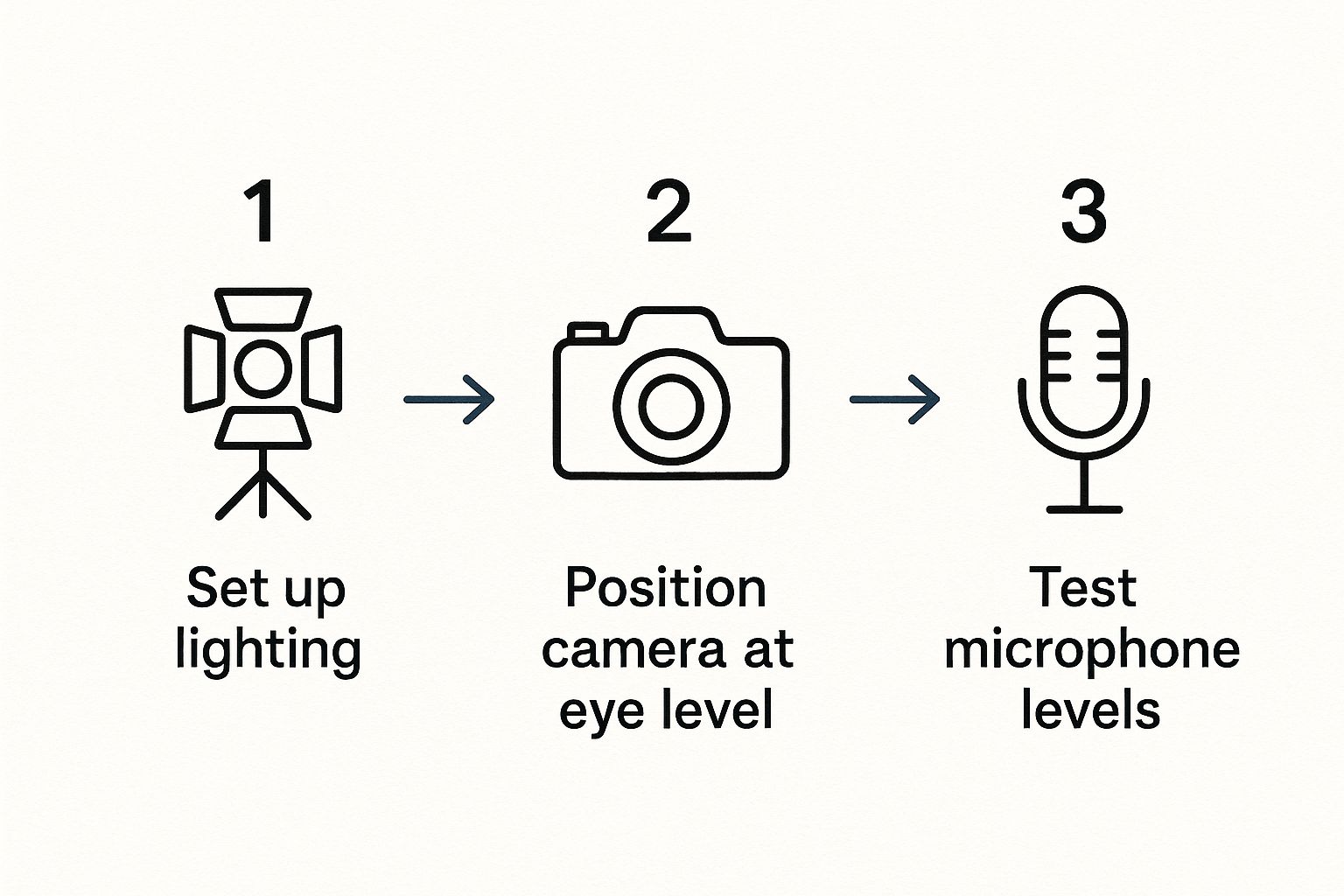
With your plan and script finalized, it's time for production. You don't need a Hollywood budget to create high-quality content. The key is to focus on clear audio and visuals, which can be achieved with just a few essential elements in your recording space.
5) Defining Your Learning Objectives
Before anything else, pinpoint your goal. What specific knowledge or skill should viewers gain after watching? Vague objectives are unhelpful; be precise about what you want your audience to achieve.
6) Knowing Your Audience Inside and Out
Who is this video for? A training video for new hires will differ significantly from one for experienced department heads. Tailoring your content to your audience is crucial for engagement and effectiveness.
7) Choosing the Right Format for the Job
Not all training content should be delivered in the same way. The format must align with your message, making complex ideas easier to absorb and simplifying the production process.
8) Structuring Your Script for Retention
A solid structure is essential for viewers to remember what they've learned. The classic "tell them what you're going to tell them, tell them, then tell them what you told them" approach remains effective for a reason.
9) Breaking Down Complex Subjects
Simplifying complex topics without losing crucial details is challenging. This is where AI assistance can be incredibly valuable, helping to distill information into digestible segments.
Practical Weekly Workflow
- Select 2-3 content blocks from this article and define a weekly objective for each.
- Develop a concise first draft for each chosen block.
- Refine the structure, tone, and clarity before publishing.
- Compare different versions using a single, measurable Key Performance Indicator (KPI).
- Retain only the formats that consistently outperform your baseline.
Conclusion
The most reliable method for scaling content output is to standardize your production process. Maintain a stable structure, iterate on individual sections, and only scale what consistently demonstrates strong performance.
Next Step
Explore Seeddance workflow templates: https://seeddance.app/
FAQs
1) Can this workflow work for a solo creator? Yes. Begin with a manageable weekly scope and consistently reuse the same production blocks.
2) How many variants should I test per post? Typically, 2 to 4 focused variants are sufficient to identify clear winners.
3) Should I prioritize trends or consistency? Leverage trends for reach, but maintain a consistent format system to build long-term brand recognition.