
Categories: AI Video Workflow, Creator Strategy, Production Process
Tags: seeddance, seedance 2.0, ai video workflow, content strategy, creator toolkit
Introduction
In the rapidly evolving landscape of learning and development, instructional design is more critical than ever. This guide explores 10 essential instructional design best practices for 2026, offering actionable strategies to enhance engagement, improve retention, and create truly effective learning experiences. By grounding these principles in practical application, we aim to provide a framework for designing impactful training programs.
Core Instructional Design Best Practices
1) Learner-Centered Design
At its core, learner-centered design is a foundational instructional design best practice that shifts the focus from what the instructor wants to teach to what the learner needs to learn. Successfully applying this principle requires a deep understanding of your audience, moving beyond assumptions to gather concrete data about their needs and preferences.
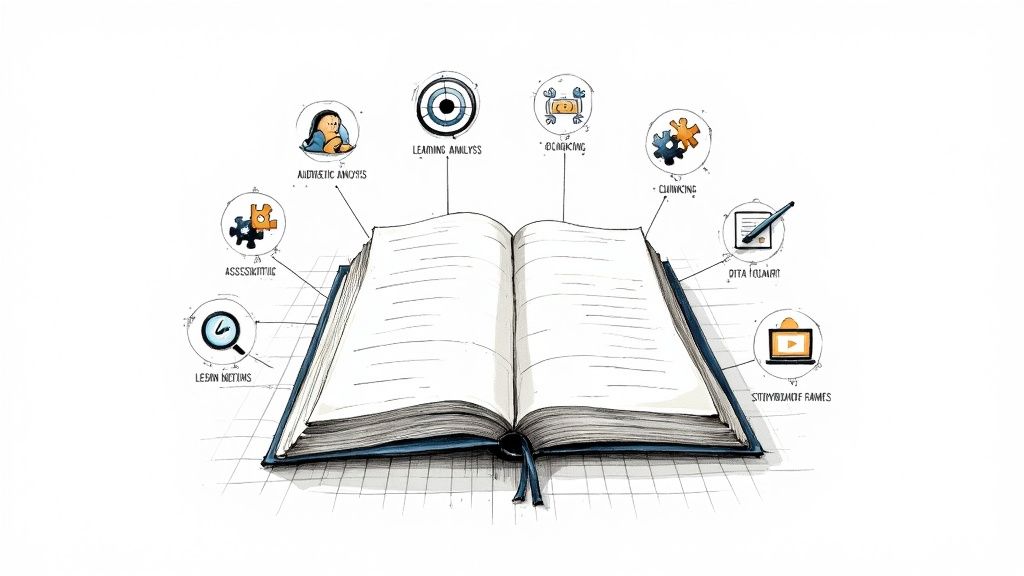
2) ADDIE Model (Analysis, Design, Development, Implementation, Evaluation)
The ADDIE model is a cornerstone of instructional design, providing a systematic five-phase framework for building effective training programs. Successfully using ADDIE involves treating it as a dynamic guide rather than a rigid checklist. Each phase requires careful attention to detail and collaboration with stakeholders to ensure the program meets its objectives.
3) Active Learning Strategies
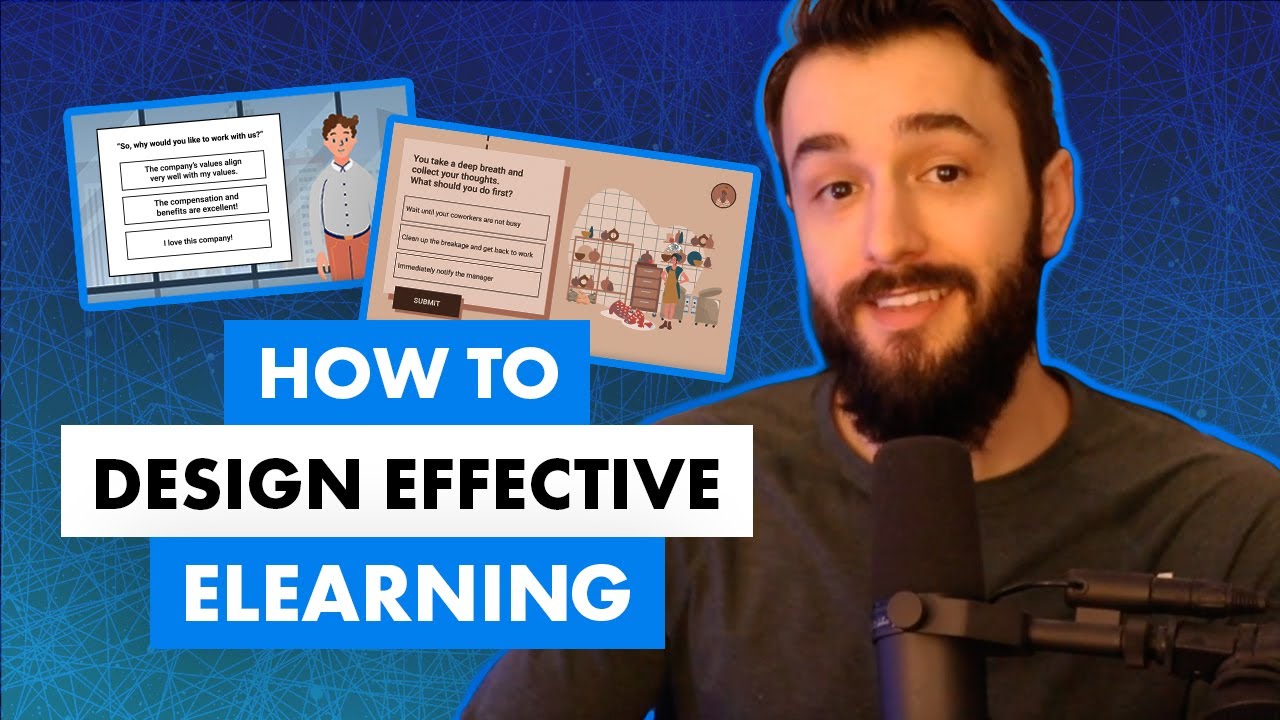
Moving beyond passive information consumption is a cornerstone of effective instructional design best practices. Active learning strategies are techniques that engage learners directly in the learning process through doing, thinking, and collaborating. Integrating active learning requires shifting from a "sage on the stage" to a "guide on the side" mentality, focusing on designing experiences rather than just delivering content.
4) Spaced Repetition and Retrieval Practice
Spaced repetition is a powerful instructional design best practice based on the psychological principle that we remember information better when we review it over increasing intervals of time. Integrating this technique requires a shift from a one-and-done training event to a continuous learning journey. The goal is to build automated, low-stakes opportunities for recall, reinforcing knowledge over time.
5) Microlearning
Microlearning is a powerful instructional design best practice that delivers learning in small, focused, and easily digestible segments. Rather than creating lengthy, comprehensive courses, this approach breaks down complex topics into bite-sized modules, typically lasting a few minutes. Effective microlearning isn't just about making content shorter; it's about making it more focused and impactful by isolating the most critical knowledge points.
6) Scenario-Based Learning and Simulations
Scenario-based learning (SBL) is an instructional design best practice that moves learners from passive knowledge absorption to active decision-making. Creating effective simulations requires careful planning and a deep understanding of the desired performance outcomes. The goal is authenticity and meaningful decision points, allowing learners to practice skills in a realistic context.
7) Scaffolding and Guided Discovery
This practice involves providing learners with support structures that are gradually removed as they gain proficiency. It encourages independent problem-solving while ensuring learners have the necessary guidance to succeed.
8) Multimodal Learning and Multimedia Design
Leveraging various modalities (visual, auditory, kinesthetic) and well-designed multimedia enhances engagement and caters to diverse learning styles. This approach makes complex information more accessible and memorable.
9) Formative Assessment and Feedback
Regular formative assessments provide ongoing feedback to both learners and instructors, allowing for adjustments to the learning process. This continuous feedback loop is crucial for identifying areas of improvement and reinforcing understanding.
10) Competency-Based Learning and Mastery-Based Progression
This approach focuses on learners demonstrating mastery of specific competencies rather than simply completing coursework. Progression is based on proven skill acquisition, ensuring learners achieve a deep understanding before moving forward.
Bringing It All Together: Your Next Step in Learning Design
Implementing these instructional design best practices can transform your training programs. Whether you're refining existing courses or building new ones, focusing on these principles will lead to more engaging, effective, and memorable learning experiences.
Practical Weekly Workflow
- Choose 2 to 3 best practices from this article and define a weekly objective for their application.
- Produce initial content drafts using tools like Text to Video and Image to Video.
- Improve structure and style with Video to Video.
- Add audio where needed via Video to Audio or Text to Music.
- Publish and analyze performance, retaining only the formats that consistently outperform your baseline.
Conclusion
The most reliable way to scale content output is to standardize how each piece is produced. Keep the structure stable, iterate by section, and scale only what proves performance. By integrating these instructional design best practices, you can create learning experiences that truly resonate and deliver measurable results.
Call to Action
- Start with Image to Video: https://seeddance.app/image-to-video
- Start with Text to Video: https://seeddance.app/text-to-video
- Refine with Video to Video: https://seeddance.app/video-to-video
- Add audio with Video to Audio: https://seeddance.app/video-to-audio
- Build supporting visuals: https://seeddance.app/text-to-image
FAQs
1) Can this workflow work for a solo creator? Yes. Start with a small weekly scope and reuse the same production blocks.
2) How many variants should I test per post? 2 to 4 focused variants are usually enough to identify clear winners.
3) Should I prioritize trends or consistency? Use trends for reach, but keep a consistent format system for long-term brand memory.