Categories: AI Video Workflow, Creator Strategy, Production Process
Tags: sora2, veo, ai video tools, comparison, video quality, workflow, seeddance
Introduction
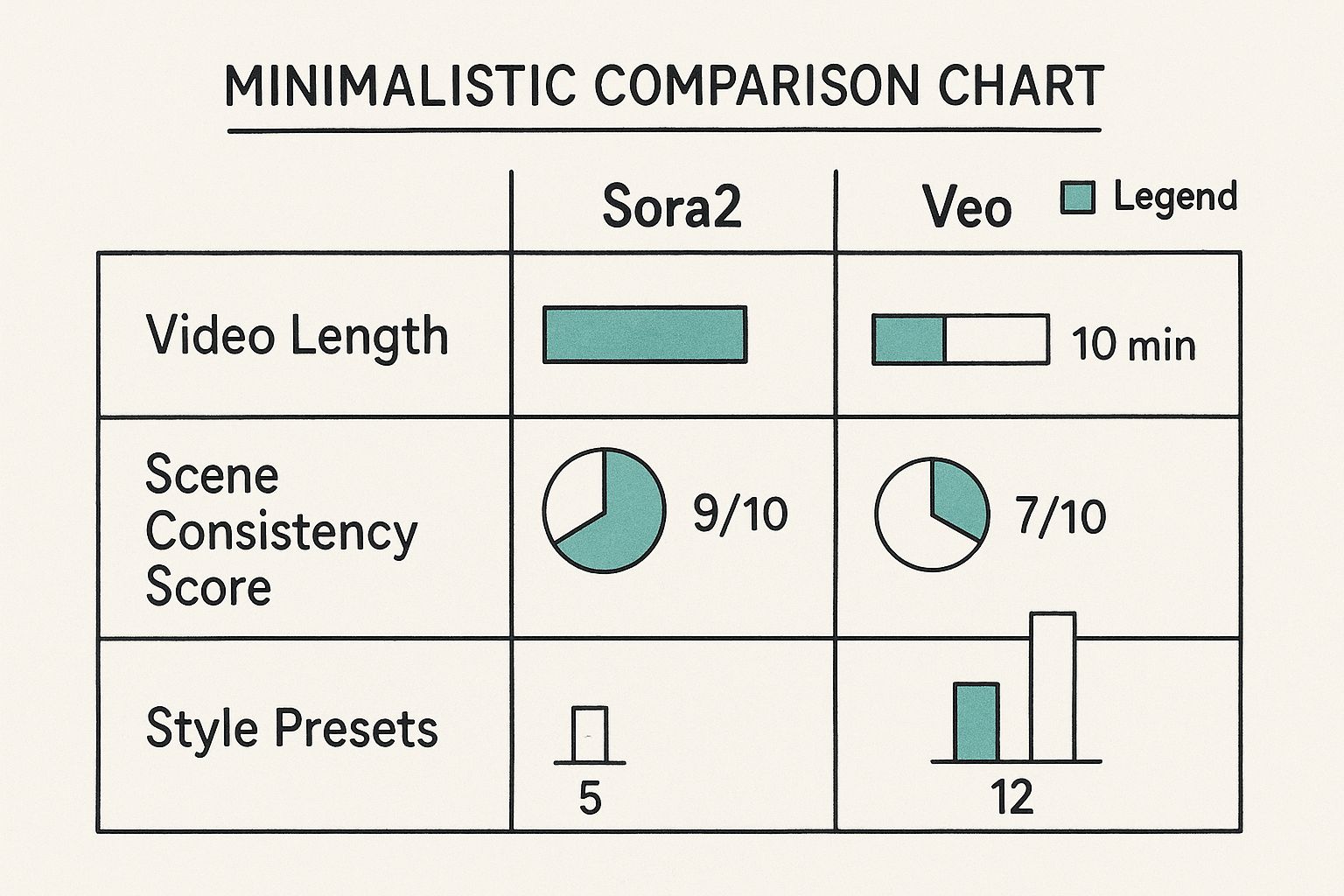
Sora2 and Veo are often compared because they sit in the same category: AI systems that can generate short videos from prompts and creative direction. The fastest way to pick the right tool is not to argue about hype or specs, but to compare outputs against the workflow you actually need.
This guide gives you a practical showdown framework: what to test, which “quality signals” matter, and how to map each tool to real use cases without guessing.
1) What you are really choosing
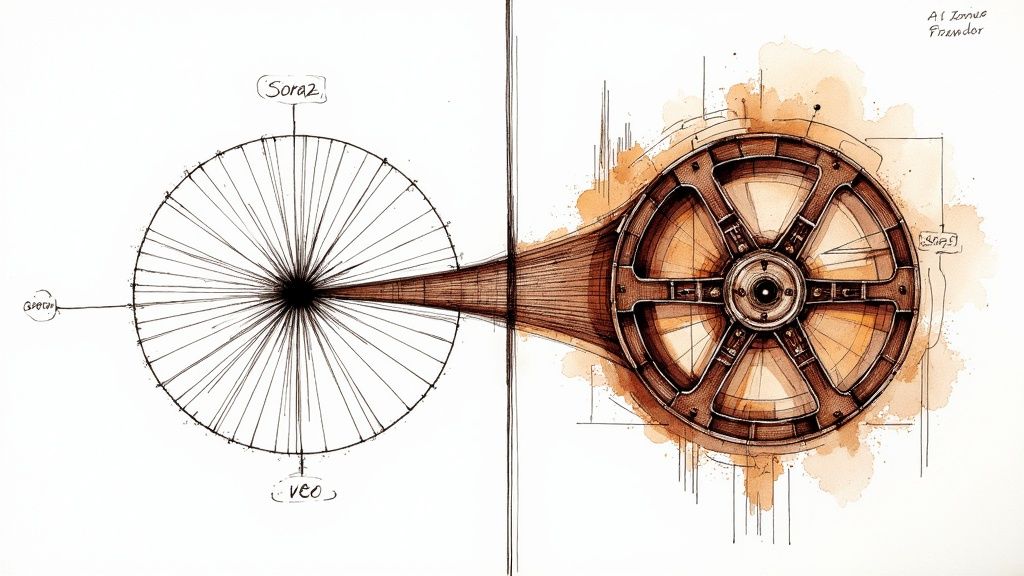
When creators say “this model is better,” they usually mean one (or more) of these:
- Quality under motion: faces, hands, text, and small details stay stable as the camera moves.
- Prompt adherence: the tool follows your subject, action, setting, and style without drifting.
- Control: you can steer camera, pacing, and composition with repeatable results.
- Iteration speed: how quickly you can get from idea to a usable cut.
- Workflow fit: whether it supports your required aspect ratios, durations, and edit steps.
Your best choice depends on which of these is most important for your content pipeline.
2) Video quality checklist (the tests that reveal truth)
Run the same prompt set through both tools and review frame-by-frame. The goal is to find failure modes early.
Key quality signals to test:
- Temporal consistency: does the subject stay coherent across the whole clip?
- Identity consistency: does a character keep the same look between shots or variants?
- Physics and contact: do footsteps, object interactions, and collisions look believable?
- Camera language: can you reliably get “slow dolly in,” “handheld,” “top-down,” etc.?
- Text and logos: if your use case needs it, does on-screen text remain readable?
- Style stability: does the aesthetic drift across frames or across generations?
3) Control and features checklist (what matters in production)
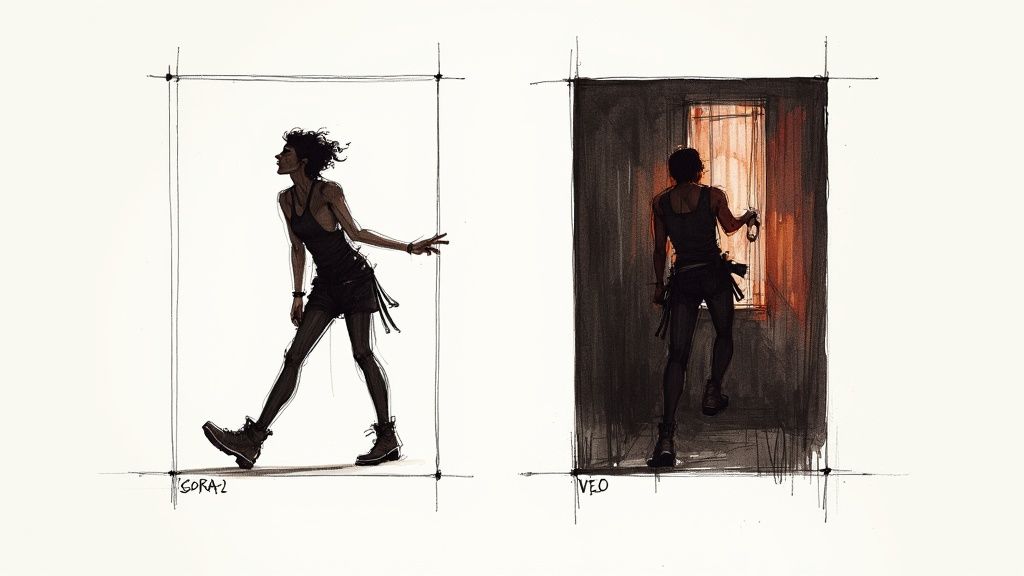
Most comparisons get stuck on “quality,” but production teams win on repeatability. Use this checklist to compare the tooling around generation:
- Input modes you need (text prompts, image reference, style reference, or both)
- Shot-to-shot consistency controls (seeds, reference frames, guidance strength)
- Aspect ratios and durations required for your distribution channels
- Variation tooling (batch variants, “keep composition,” “change only background,” etc.)
- Export constraints (watermarks, resolution, codec, file size)
- Team workflow (folders/projects, reuse of prompts, collaboration)

4) Use cases: which tool should you test first?
Instead of picking a “winner,” pick the fastest path to a successful result:
- Short-form ads and social: prioritize speed, aspect ratios, and repeatable style.
- Story scenes and cinematic beats: prioritize camera control and consistency under motion.
- Product demos and UI explainers: prioritize text clarity and stable screen content.
- Stylized or animated looks: prioritize style stability across frames and variants.
If your content pipeline spans multiple formats, your best workflow is often: generate options fast, pick winners, then iterate only the weak shots.
5) A simple “showdown” test plan (copy/paste)
Use the same test set for both tools:
- One subject prompt: a person doing one clear action (walking, turning, speaking).
- One camera prompt: a slow dolly + a cut to close-up.
- One complexity prompt: multiple objects interacting (hand picks up object, places it down).
- One branding prompt: logo/text on screen (if your use case requires it).
Score each result on: consistency, prompt adherence, editability, and time-to-usable.
Conclusion
Sora2 vs Veo is less about who has the “best model” and more about who gives you the most reliable path to publishable clips in your workflow. Run a small, repeatable prompt test, then choose the tool that wins on your top constraint.
Next step: if you want a single studio to iterate prompts and outputs consistently, explore workflows at https://seeddance.app/
FAQs
1) Which is better: Sora2 or Veo?
It depends on your use case. Pick 3 to 5 representative prompts, run them in both tools, and choose the one that performs best on your top constraint (quality, control, speed, or workflow fit).
2) What should I test first when comparing AI video tools?
Temporal consistency under motion, prompt adherence, and editability. These three quickly reveal whether a tool will save time or create rework.
3) How do I get more consistent results?
Keep prompts structured (subject, action, camera, style, lighting), reuse a small set of style rules, and iterate shot-by-shot instead of regenerating a whole sequence.
Media References
- https://cdn.seeddance.app/blog/sora-2/20260312113950-d7gu61o9.jpg
- https://cdn.seeddance.app/blog/sora-2/20260312113952-jt4e6rik.jpg
- https://cdn.seeddance.app/blog/sora-2/20260312113953-xlwbcxw0.jpg
- https://cdn.seeddance.app/blog/sora-2/20260312113954-nzylv1ky.jpg
- https://cdn.seeddance.app/blog/sora-2/20260312113955-sqgkkpnj.jpg
- https://cdn.seeddance.app/blog/sora-2/20260312113956-h6u3c8pq.jpg