Categories: AI Video Workflow, Creator Strategy, Tool Comparison
Tags: sora is dead, sora 2, ai video generator, seeddance, video workflow
Introduction
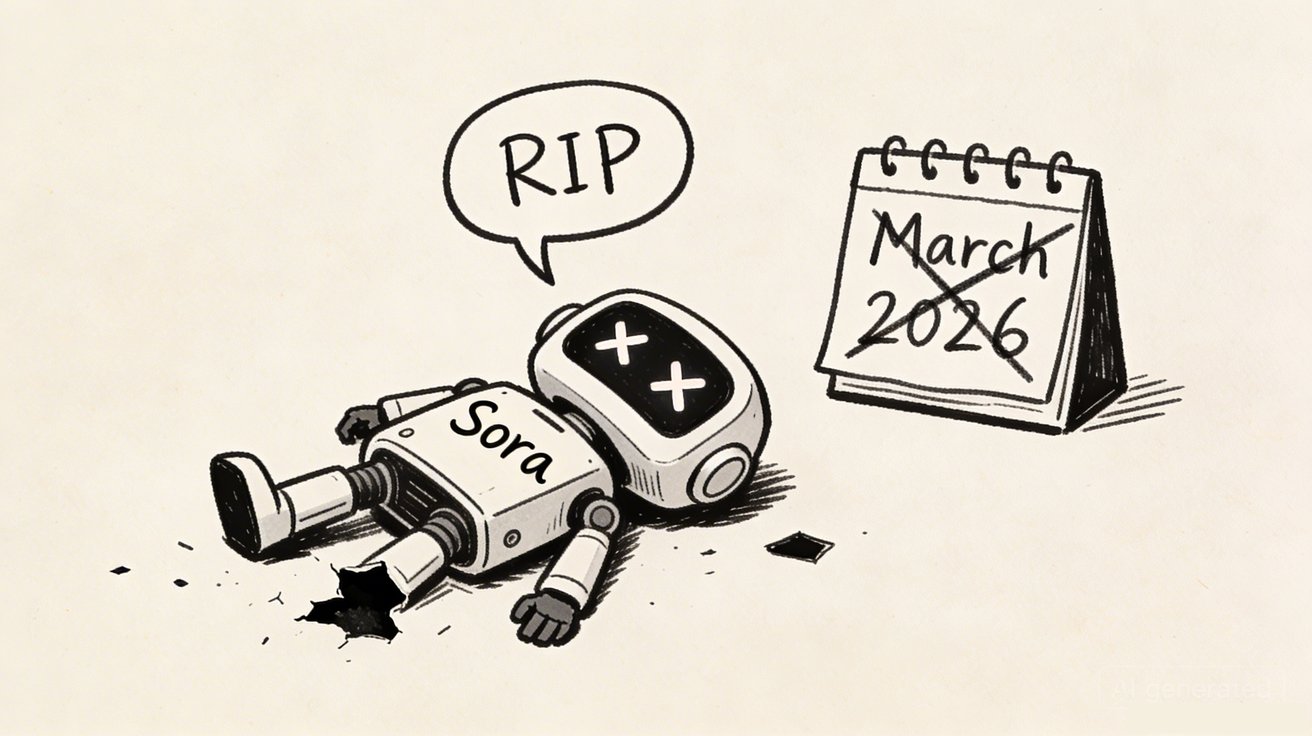
Searches for "Sora is dead" exploded because creators saw a fast-moving product story and assumed the whole platform had vanished. But as of March 27, 2026, that is not the most accurate way to describe what happened. OpenAI's Help Center indicates that Sora 2 is the current Sora experience on web and in the app, while the older Sora 1 web experience is being sunset.
That distinction matters. If you are evaluating AI video tools, the real question is not whether Sora still exists in name. The real question is whether Sora is the best tool for your workflow today, or whether another platform gives you better quality, faster iteration, lower testing cost, or a more flexible production setup.
This guide follows the intent behind the reference article, but reframes it into a more useful and more accurate version: what changed around Sora in 2026, why people think it is dead, and what creators should use when Sora is not the right fit.
1) The short answer: is Sora dead?
No, not exactly.
What appears to be true from current OpenAI help documentation is:
- Sora 2 remains the current Sora experience.
- The older Sora 1 on web is being sunset.
- Billing and usage details now depend on which Sora experience you are talking about.
Why, then, do so many people say "Sora is dead"?
Because for many creators, a product can feel "dead" long before the brand disappears. If earlier workflows change, legacy access is retired, expectations from early demos no longer match the practical experience, and alternatives start feeling more dependable, the market starts using harsher language than the official documentation does.
So the phrase "Sora is dead" is better understood as a market reaction than a precise product status.
2) What actually changed in 2026
The fastest way to understand the confusion is to separate the public narrative from the workflow reality.
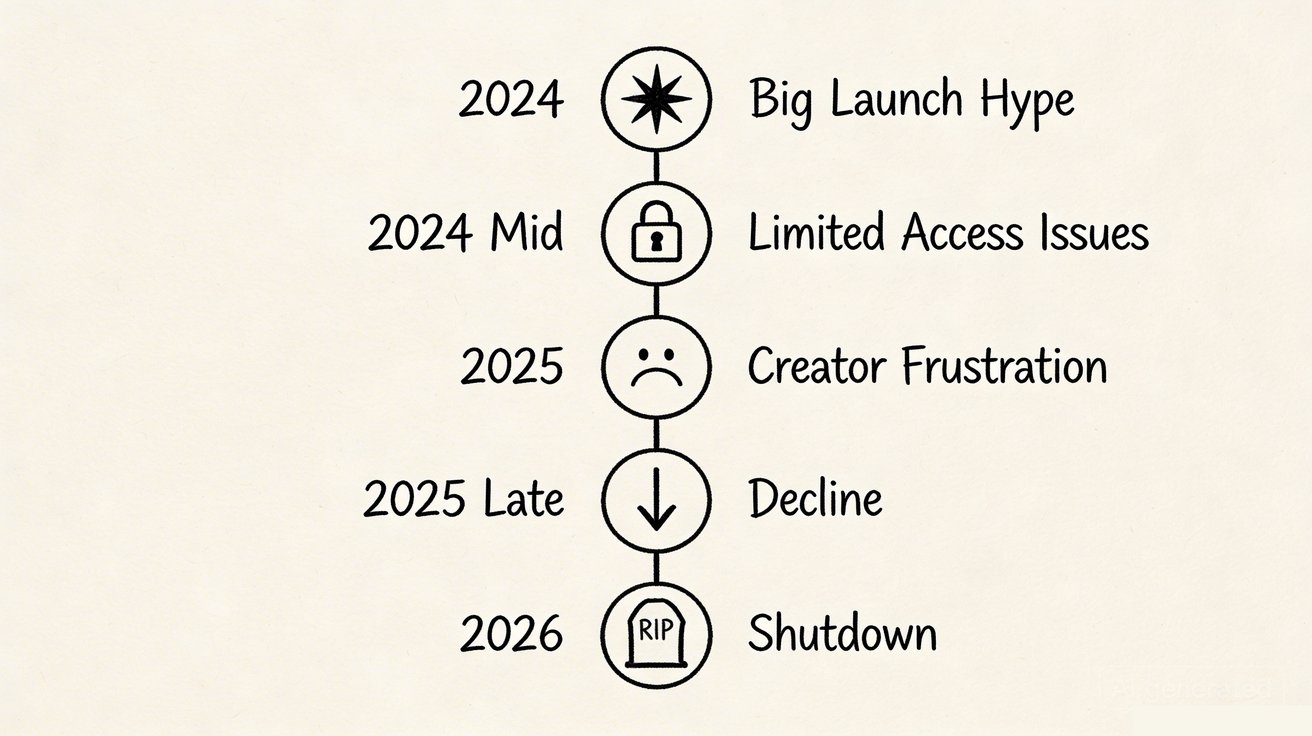
In the public narrative, Sora was introduced as one of the biggest AI video launches in the market. It became shorthand for cinematic prompt-to-video generation and helped set expectations for the whole category.
In workflow reality, creators care about different questions:
- Can I use the product right now?
- Does it reliably produce publishable clips?
- How much does testing cost?
- Can I move quickly from prompt to usable output?
- Is the workflow stable enough to build around?
By 2026, that practical lens mattered more than hype. OpenAI's own help content reflects a product transition, not a clean continuation of the original story many creators had in mind. That is why "Sora is dead" spread so quickly: it compresses a complicated transition into one dramatic phrase.
3) Why people think Sora is dead even if Sora 2 still exists
There are four common reasons.
1) The legacy experience is being sunset
Once a legacy product path is being retired, people naturally assume the whole product family is on the way out. In reality, a sunset can also mean consolidation around a newer version. But most creators do not speak in product-management language. They speak in outcomes. If their old path disappears, they say the tool died.
2) The hype cycle burned trust
Sora's early demos shaped expectations across the AI video market. When a product becomes larger than its day-to-day workflow reality, any transition feels like a collapse. This is not unique to OpenAI. It happens whenever a launch is remembered more vividly than the operational product that follows.
3) Alternatives improved fast
The market did not stand still. Competing tools kept improving around quality, speed, interface design, editing control, and pricing flexibility. Even if Sora remains available, creators will still move away if another tool gets them to a usable result faster.
4) Teams now optimize for reliability, not mythology
The category is maturing. Agencies, brands, and independent creators care less about which model generated the biggest launch-week buzz and more about whether they can repeat a workflow every week without unnecessary friction.
4) What this means for creators
The practical lesson is straightforward: do not build your production assumptions around any single launch narrative.
Instead, evaluate every AI video tool using the same set of criteria:
Output quality under motion
Can it keep subjects, lighting, and composition coherent through the clip?Prompt adherence
Does it actually follow your subject, action, camera direction, and style constraints?Iteration speed
How quickly can you go from first prompt to something a teammate or client can review?Cost to test
Can you learn enough before committing to a larger paid workflow?Workflow fit
Does the tool support the inputs, aspect ratios, exports, and collaboration style your process needs?
That framework is more durable than any single product story. It also protects you from overcommitting to one model just because the brand is familiar.
5) What to use if Sora is not your best fit
If Sora does not match your needs, the answer is not to wait for a perfect replacement. The answer is to test the strongest alternatives against the same brief.
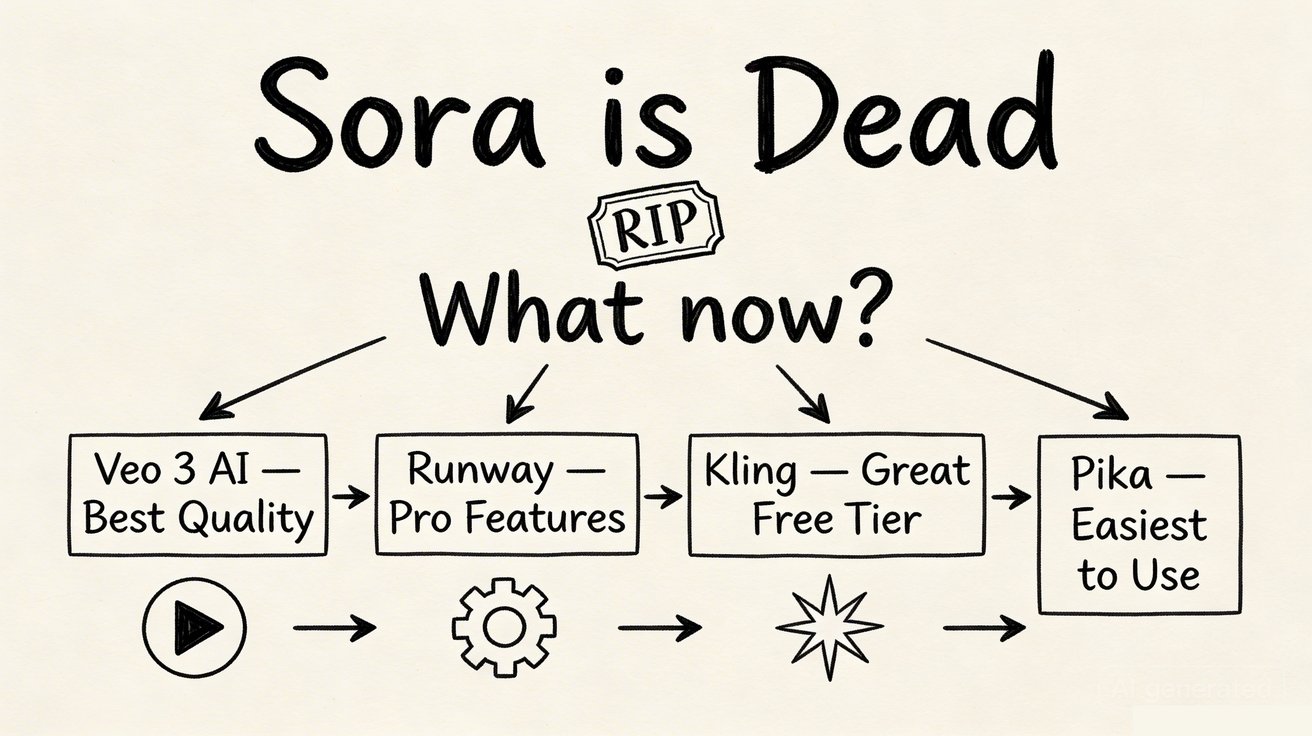
Veo3 AI for quality-first generation
If your priority is strong visual output from text prompts or still images, Veo3 AI is a solid first comparison point. The reference article pushes it as the main replacement, and the broader comparison logic is easy to understand: creators often leave one tool because they want higher-quality output without a more complex process.
Best for: cinematic concepts, marketing visuals, and quality-first testing.
Trade-off: if you need deeper built-in editing controls, you may still finish the job elsewhere.
Runway for more control
Runway is a better fit when your team wants to shape motion and composition more deliberately inside the same environment.
Best for: teams that care about editing and direction as much as generation.
Trade-off: more control usually means a more involved workflow.
Kling for speed and value
Kling is useful when throughput matters. If the job is to test many variants quickly and cheaply, speed can matter more than chasing the single best-looking output.
Best for: iteration-heavy teams and short-form content production.
Trade-off: complex scene steering may still take more effort.
Pika for lightweight social workflows
Pika is attractive when the team values simplicity. Not every workflow needs a heavy production environment. Sometimes the fastest path to a decent draft is more valuable than the most sophisticated toolchain.
Best for: solo creators, quick concepts, and lightweight social clips.
Trade-off: lower ceiling on polish and control.
Seedance for multi-model workflows
Seedance becomes compelling when your challenge is not just "which model is best?" but "how do I compare multiple paths without rebuilding the workflow every week?" That is especially relevant now that the market is fragmented across several strong generation models.
Best for: agencies, multi-format teams, and creators who want one workspace for several model routes.
Trade-off: a multi-model environment can feel less minimal than a single-purpose app.

6) A practical comparison workflow
If you are reconsidering Sora, do not switch tools based on a headline. Run a controlled test instead.
- Pick three real prompts from your current workflow.
- Run the same brief in Sora and two or three alternatives.
- Test both text-to-video and image-to-video if your process ever starts from still assets.
- Score each result on time-to-usable output, consistency under motion, and cleanup required.
- Standardize the winning process, not the winning one-off clip.
If you want a practical place to run that comparison, start with Seeddance, then compare outputs across Text to Video, Image to Video, and Video to Video. The goal is not to prove one brand wins forever. The goal is to find the shortest reliable path to publishable results.
Conclusion
So, is Sora dead?
As of March 27, 2026, the most accurate answer is no, but the original Sora story has clearly changed. Sora 2 remains active, while the legacy Sora 1 web experience is being sunset. That is enough change for many creators to rethink their workflow, and enough confusion for the market to keep using the phrase "Sora is dead."
For creators, the right response is not nostalgia and not panic. It is disciplined comparison. Choose the tool that gets your team to usable output faster, more consistently, and with less rework.
Next Step
If you want to compare several AI video workflows in one place, start at https://seeddance.app/ and test the same prompt across multiple generation modes before committing to one path.
FAQs
1) Is OpenAI Sora fully shut down?
Not based on the current OpenAI help documentation available on March 27, 2026. The active experience is Sora 2, while Sora 1 on web is being sunset.
2) Why do so many people say "Sora is dead"?
Because legacy access changes, hype-driven expectations, and stronger alternatives made many creators feel the original Sora promise had effectively ended.
3) Should creators stop testing Sora?
No. But they should stop assuming it is the default winner. It should be tested against alternatives on the same workflow.
4) What is the best replacement if Sora does not fit?
That depends on your constraint. Veo3 AI is a good quality-first comparison, Runway is stronger for control, Kling is strong on speed and value, and Seedance is useful when you want a multi-model workflow.
Media References
- https://cdn.seeddance.app/blog/sora-is-dead/20260327104306-grxmkzbz.jpeg
- https://cdn.seeddance.app/blog/sora-is-dead/20260327104307-r8wryzyq.jpeg
- https://cdn.seeddance.app/blog/sora-is-dead/20260327104308-9oygph4l.jpeg
- https://cdn.seeddance.app/blog/sora-is-dead/20260327104308-r543z1o4.jpeg
- https://cdn.seeddance.app/blog/sora-is-dead/20260327104309-io1vlm9m.jpeg
- https://cdn.seeddance.app/blog/sora-is-dead/20260327104310-mpr1bocv.jpeg