Categories: AI Video Workflow, Creator Strategy, Production Process
Tags: seeddance, seedance 2.0, ai video workflow, content strategy, creator toolkit
Introduction
This guide translates key short-form video marketing concepts into a practical Seeddance production framework. The focus is on clearer planning, faster execution, and stronger publishing consistency with Seeddance 2.0.
What Is Short Form Video Marketing?
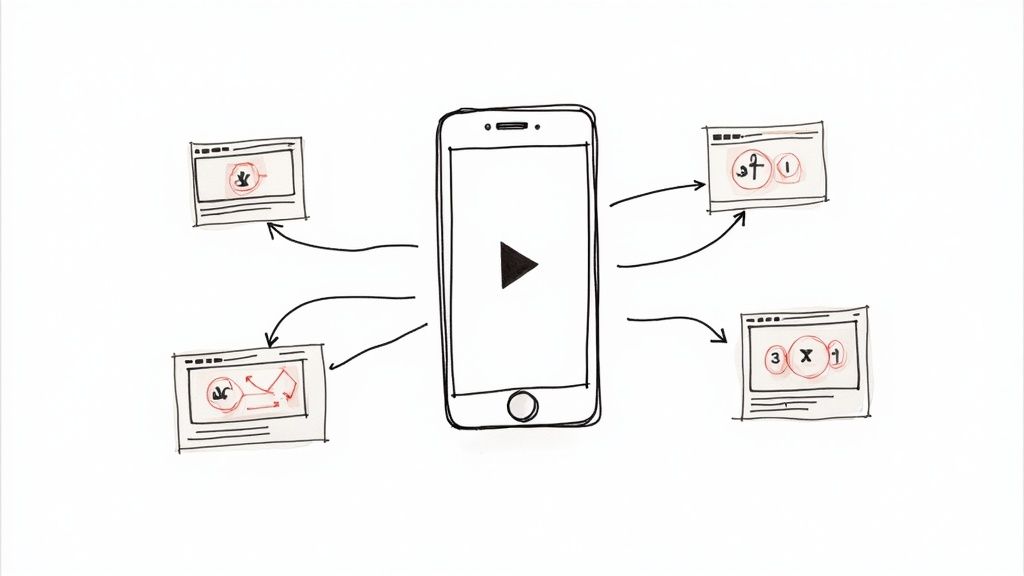
Imagine walking into a packed, noisy party. You wouldn’t start a conversation with a long-winded story, right? You’d lead with a firm handshake and a killer opening line. Short-form video marketing is your brand's digital handshake. These brief, impactful videos are designed for today's shrinking attention spans, making them incredibly effective for engaging audiences quickly.
The Psychology Behind Its Power
Why are these tiny videos so effective? Our brains have adapted to a world overflowing with information. This shift means we prefer content that is quick, authentic, and easily digestible on mobile devices. Short-form video perfectly aligns with this modern consumption habit.
Why It's a Must-Have for Modern Brands
The numbers speak for themselves. Short-form video isn't just popular; it's preferred. A staggering 73% of consumers would rather watch a short video to learn about a product or service. These videos also drive significant engagement, making them essential for any modern brand's marketing strategy.
Choosing the Right Platform for Your Brand
Picking the right platform for your short-form videos is like choosing the perfect stage for a performance. You wouldn't book a punk band for a classical music hall, right? The same logic applies here. Each platform has a distinct audience and culture.
TikTok: The Cultural Trendsetter
Think of TikTok as the internet’s creative playground. It's a fast-paced, chaotic, and brilliant space where trends are born and go viral overnight. If your brand thrives on rapid trends, authentic content, and broad reach, TikTok is your stage.
Instagram Reels: The Aesthetic Powerhouse
Instagram Reels operates within a more polished and established world. While it shares similarities with TikTok, its real power comes from seamless integration with the rest of the Instagram app—Stories, the main feed, and especially shopping. Reels is ideal for brands focused on aesthetics, community engagement, and direct commerce.
YouTube Shorts: The Discovery Engine
YouTube Shorts has a secret weapon: it’s plugged into the world's second-largest search engine. While TikTok and Reels are all about the social feed, Shorts taps directly into search intent. This makes it a powerful tool for discoverability and reaching audiences actively looking for information.
Platform Comparison: TikTok vs. Reels vs. Shorts
Ultimately, the best platform is the one that best aligns with your brand's voice, your audience, and your objectives. Don't be afraid to experiment, but start by focusing your energy where you have the most natural fit.
Developing Your Winning Video Strategy
Jumping into short-form video without a strategy is like trying to build a house without a blueprint. You might end up with a few interesting-looking walls, but you certainly won't have a functional home.
Define Your Core Mission and Goals
Before you even think about picking up a camera, you have to ask the most important question: Why are we doing this? Your answer is the compass for your entire video marketing effort. Are you trying to make a complicated product easy to understand? Increase brand awareness? Drive sales? Your "why" will dictate your "what."
Your Creative Playbook of Video Ideas
Once you’ve got your "why," you need to figure out your "what." You can't be an expert on everything, so you need to pick your lane. That’s where content pillars come in—these are the three to five core topics that your brand will own and consistently create content around.
How to Produce Great Videos Efficiently
The most reliable way to scale content output is to standardize how each piece is produced. Keep the structure stable, iterate by section, and scale only what proves performance.
Seedance Execution Path:
- Build your first version: Use Text to Video or Image to Video to generate initial concepts quickly.
- Refine motion and style: Enhance your drafts with Video to Video for improved visual flow and aesthetic.
- Add sound layers: Integrate audio via Video to Audio or Text to Music when needed to boost engagement.
- Publish and test: Release one clean variant and one experimental version, then compare their performance to learn and optimize.
Why this works:
- Keeps production repeatable and consistent.
- Reduces random editing loops and wasted effort.
- Makes weekly iteration measurable and data-driven.
Measuring What Matters in Your Video Analytics
To truly succeed, you need to track what matters. Focus on metrics that align with your initial goals, whether it's views, engagement rate, click-throughs, or conversions. Consistent analysis helps refine your strategy.
Practical Weekly Workflow
- Choose 2 to 3 content blocks from your strategy and define a clear weekly objective for each.
- Produce your first drafts using Seeddance's Text to Video and Image to Video tools.
- Improve structure and style with Video to Video.
- Add audio where needed via Video to Audio or Text to Music.
- Publish and analyze: Keep only the formats that consistently outperform your baseline metrics.
Conclusion
By leveraging a structured approach and Seeddance's AI tools, you can create compelling short-form video content efficiently and effectively, driving real engagement and growth for your brand.
Call to Action
- Start with Image to Video: https://seeddance.app/image-to-video
- Start with Text to Video: https://seeddance.app/text-to-video
- Refine with Video to Video: https://seeddance.app/video-to-video
- Add audio with Video to Audio: https://seeddance.app/video-to-audio
- Build supporting visuals: https://seeddance.app/text-to-image
Frequently Asked Questions
1) Can this workflow work for a solo creator? Yes. Start with a small weekly scope and reuse the same production blocks to maximize efficiency.
2) How many variants should I test per post? 2 to 4 focused variants are usually enough to identify clear winners and optimize your content.
3) Should I prioritize trends or consistency? Use trends for reach and discoverability, but maintain a consistent format system for long-term brand recognition and memory. ---