
Categories: AI Video Workflow, Creator Strategy, Tool Comparison
Tags: best ai video generator, sora 2, ai video tools, seeddance, workflow comparison
Introduction
Many creators are now searching for the "best AI video generator after Sora shutdown." But as of March 27, 2026, OpenAI's Help Center does not describe the situation as a full Sora shutdown. Instead, it shows Sora 2 as the current experience on web and in the app, while the older Sora 1 web experience is being sunset.
That still leaves the core user question intact. Even if Sora 2 remains active, plenty of teams are re-evaluating the category. They want better visual quality, faster iteration, more control, lower-friction testing, or a workflow that is easier to scale across multiple formats and models.
So this guide keeps the practical intent of the reference article, but updates the premise: the right question is not "what survived after Sora died?" The right question is which AI video generator is best for your workflow in 2026 if Sora is no longer your default choice?
1) What "after Sora shutdown" really means
For most searchers, this phrase is shorthand for a broader shift:
- The original Sora story no longer feels stable enough to treat as the automatic winner.
- The market now has several credible alternatives.
- Teams want tools they can evaluate on output, speed, control, and repeatability instead of launch hype.
That is why this comparison matters even if Sora 2 still exists. In practice, creators are moving from brand-first decisions to workflow-first decisions.
2) The best AI video generators to compare in 2026
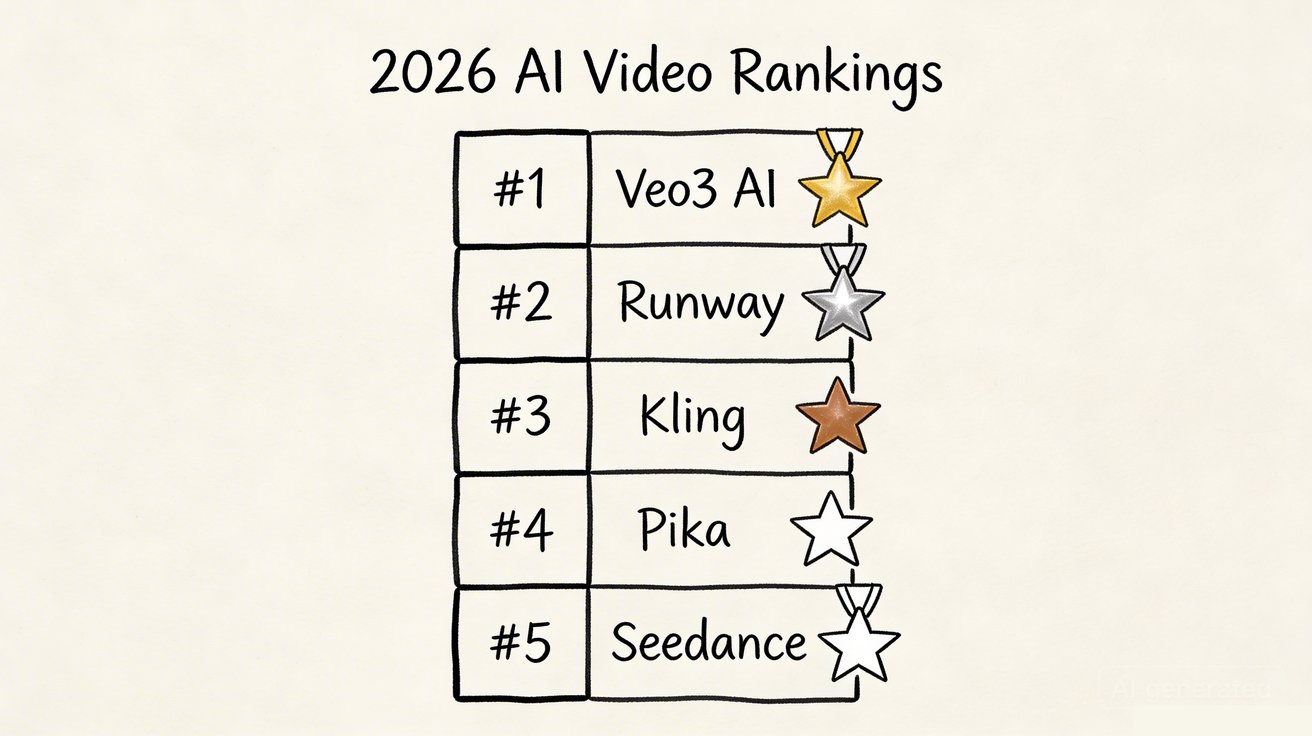
Veo3 AI for best overall output quality
If your top priority is strong visual output with a relatively approachable workflow, Veo3 AI is one of the best starting points. The reference article ranks it first, and that conclusion makes sense for quality-first users. Google DeepMind's Veo 3 family has pushed expectations higher around realism, prompt following, and more cinematic motion, which makes Veo3 AI especially attractive for polished marketing visuals, concept scenes, and product storytelling.
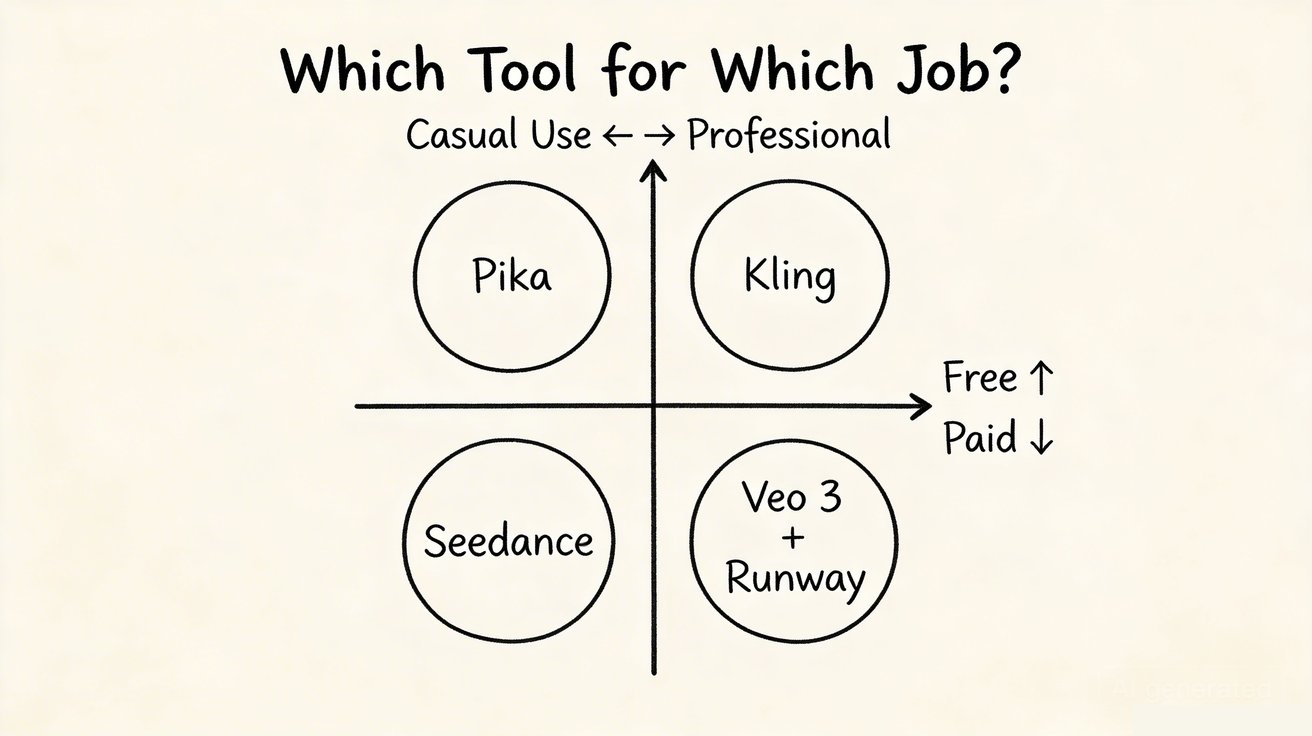
Best for: creators who want the strongest first-pass quality from text prompts or still images.
Trade-off: if your team wants deeper in-platform editing and motion shaping, you may still need a second tool in the workflow.
Runway for creative control
Runway remains a strong option when generation alone is not enough. If you care about adjusting motion, shaping composition, and iterating inside a more editor-like environment, Runway is often the better fit.
Best for: creative teams that want more direct control over how a shot evolves.
Trade-off: the more control you ask for, the more deliberate and involved the workflow usually becomes.
Kling for speed and value
Kling is worth testing when volume and iteration speed matter more than prestige. Teams producing many short-form variants often care less about theoretical best quality and more about how quickly they can test ideas at acceptable quality.
Best for: social teams, prompt experimentation, and fast content cycles.
Trade-off: you may get less precision when trying to steer complicated scenes.
Pika for lightweight social workflows
Pika is attractive when the goal is simple: get from concept to clip quickly. It lowers the barrier to entry and works well for creators who do not need a heavy production environment every time they generate.
Best for: solo creators, casual experiments, and lightweight social posts.
Trade-off: simplicity is helpful, but it usually comes with a lower ceiling on polish and control.
Seedance for multi-model workflows
Seedance stands out when your problem is not picking one model once, but comparing several model paths repeatedly without rebuilding the entire workflow. That matters more in 2026 because the category is no longer dominated by one narrative. Teams increasingly want a stable workspace where several generation routes can be tested against the same brief.
Best for: agencies, multi-format teams, and creators who want one workspace for multiple generation strategies.
Trade-off: if you want only one dedicated generator and nothing else, a simpler single-model tool can feel more straightforward at first.
3) Quick comparison table
| Tool | Best for | Why teams choose it | Main trade-off |
|---|---|---|---|
| Veo3 AI | Quality-first generation | Strong realism and approachable generation workflows | Less editor-like control inside the same environment |
| Runway | Creative control | Better in-platform shaping of motion and composition | More involved workflow |
| Kling | Speed and value | Fast testing and strong throughput | Less precise scene steering |
| Pika | Lightweight social content | Fast to learn and fast to use | Lower ceiling on polish and control |
| Seedance | Multi-model comparison | Compare several generation paths in one workspace | Less minimal than a single-purpose app |
4) How to choose the best AI video generator
Instead of asking "which tool is best?" in the abstract, test each tool against the job you actually need done.
Focus on five signals:
Publishable quality under motion
Does the clip stay coherent once the camera moves or the subject changes pose?Prompt adherence
Does the tool follow your subject, action, framing, and style instructions?Iteration speed
How quickly can you move from concept to something worth reviewing?Cost to learn
Can you discover the tool's real strengths before committing heavily?Workflow fit
Does it support the inputs, outputs, and collaboration rhythm your team already uses?
This is the real lesson many teams took from the Sora transition. The market is healthier when tools are judged by repeatable utility rather than launch-week mythology.

5) A practical testing workflow
If you are moving beyond Sora or just widening your comparison set, use a controlled process:
- Pick three real prompts from your existing workflow.
- Run the same brief in two or three competing tools.
- Test both text-to-video and image-to-video if your process ever begins with still assets.
- Review results for time-to-usable output, consistency under motion, and cleanup required.
- Standardize the winning process, not the single best lucky clip.
If you want one place to compare several AI video paths without rebuilding your process every time, start with Seeddance, then compare the same concept across Text to Video, Image to Video, and Video to Video.
6) What to watch for in the rest of 2026
The category is now being shaped by practical competition instead of one dominant story. That means the most important signals to watch are:
- which platforms keep improving output quality in ways that survive real production review
- which ones make iteration cheaper and faster
- which ones turn generation into a repeatable workflow instead of a one-off demo
- which ones keep reducing friction between prompt, revision, export, and publishing
That is a better lens than waiting for one platform to "win" permanently.
Conclusion
The best AI video generator in 2026 depends on your constraint.
- Choose Veo3 AI if you want a strong quality-first starting point.
- Choose Runway if control matters most.
- Choose Kling if fast iteration and value matter most.
- Choose Pika if you want the simplest path to quick clips.
- Choose Seedance if your team needs a multi-model workflow instead of a single-model bet.
Sora still matters, but it should not be the only frame of reference. As of March 27, 2026, the more accurate story is not "the entire product disappeared." It is that the market matured, creator expectations changed, and the smartest teams now compare tools by workflow fit rather than by reputation alone.
Next Step
If you want to compare multiple AI video workflows in one place, start at https://seeddance.app/ and run the same prompt across several generation modes before locking into one tool.
FAQs
1) What is the best AI video generator in 2026?
There is no universal winner. Veo3 AI is a strong quality-first option, Runway is stronger for control, Kling is strong on speed and value, and Seedance is useful for multi-model workflows.
2) Is this really "after Sora shutdown"?
Not in the strict official sense. As of March 27, 2026, OpenAI's Help Center still describes Sora 2 as the current experience, while the legacy Sora 1 web experience is being sunset.
3) Which tool is best for beginners?
Pika is a good lightweight option for simple social use, while Veo3 AI is a strong starting point if you care more about output quality than minimalism.
4) What is the best way to compare AI video tools?
Use the same production-style prompts across each tool, then compare time-to-usable output, prompt adherence, consistency under motion, and the amount of cleanup each result needs.
Media References
- https://cdn.seeddance.app/blog/best-ai-video-generator-after-sora-shutdown/20260327104852-4kw9e0tz.jpeg
- https://cdn.seeddance.app/blog/best-ai-video-generator-after-sora-shutdown/20260327104852-vk9h5nzm.jpeg
- https://cdn.seeddance.app/blog/best-ai-video-generator-after-sora-shutdown/20260327104853-f23rwzgf.jpeg
- https://cdn.seeddance.app/blog/best-ai-video-generator-after-sora-shutdown/20260327104854-mbew72h1.jpeg
- https://cdn.seeddance.app/blog/best-ai-video-generator-after-sora-shutdown/20260327104855-71v4m1c3.jpeg
- https://cdn.seeddance.app/blog/best-ai-video-generator-after-sora-shutdown/20260327104856-zyshizjb.jpeg